The latest stats for households in TA in England show 134,210 households were in temporary accommodation (TA) on 31 December 2025. This is a slight reduction of 0.4% from the previous quarter, which equates to 550 fewer households. Meanwhile, the number of children in TA is up by 140 and now sits at 176,130. At first glance, it is a relief to be able to report a change in the right direction, even if it is small, it is cause for celebration. But the bigger picture remains the same. The number of households is still up 5% from the same time last year.
43,040 households were placed out of area, which is an increase of 4.8% compared to the same time last year. This is a third of all households in temporary accommodation, or 32%.
Again, it is good to see a reduction in the number of households with children in B&B accommodation who have been resident for more than 6 weeks. This is down 63% from 3,230 on 31 December 2024 to 1,190 a year later. Considering the increase in out of area placements, it is, however, a real concern that one unsuitable accommodation has been replaced with another. Available data does not allow us to investigate this.
104 children have died while in TA
This comes just as we have revealed that at least 104 children have died with temporary accommodation indicated as a contributing factor to their vulnerability, ill-health, or death between 1st April 2019 and 31st March 2025. This is a shocking and unacceptable state of affairs that should be a wake-up call for action.
This number has increased since we last asked the National Child Mortality Database (NCMD), through the APPG for Households in TA, when they found 74 children had died over a five year period. This increase is explained by an extra year being recorded, as well as late reporting on deaths occurring in previous years. The slow and incomplete reporting in the given period means the true number of children dying with TA as a contributing factor is almost certainly higher than 104
There is much we don’t know because it isn’t recorded. With substantial gaps in the data, it is difficult to understand the full picture and, therefore, how and where to improve. Children and adults die in these gaps. It is hard to imagine another welfare provision where this would be acceptable.
Poor standards in TA
We do know that these deaths often come down to standards that are so poor as to be harmful. Overcrowding and a lack of safe sleeping arrangements are responsible for many of the youngest lives - of the 104 children, 76 were under 1 - and severe black mould and damp causes severe respiratory illnesses, of the kind that killed two-year-old Awaab Ishak.
We have long campaigned for an improvement in the standards of TA, and we therefore welcome a new report from the Housing, Communities and Local Government (HCLG) Committee, with a clear message that poor conditions in temporary accommodation require urgent action that cannot wait any longer.
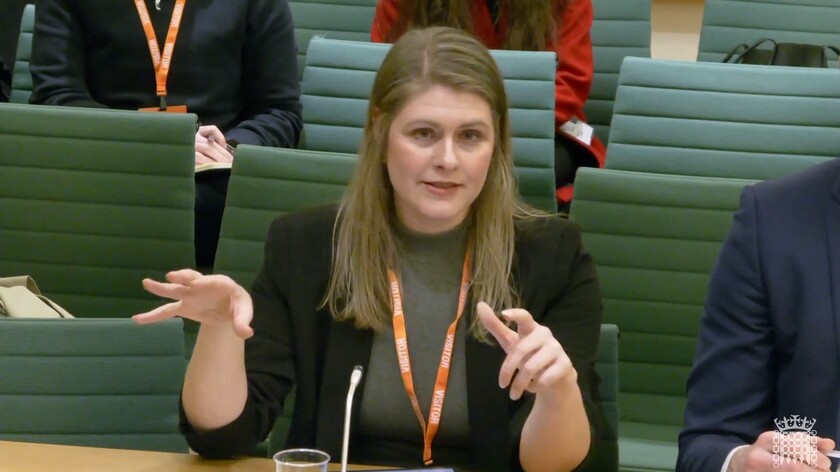
Having given evidence through appearing before the select committee, and the preceding public consultation, it is encouraging to see how carefully they have listened, to us and other professionals with special insight into conditions in temporary accommodation.
The need for strong and enforceable protections thread through the report. The Committee acknowledges that it is imperative that more social housing is built, but expresses a clear concern that current conditions in temporary accommodation are unacceptable and require separate attention through legal enforcement and better data collection.
Awaab’s Law and the Decent Homes Standard
The Committee recommends that legal enforcement should come in the form of a faster roll-out of Awaab’s Law and extending the Decent Homes Standard to temporary accommodation. Awaab’s Law would strengthen the right for people living in TA to complain about poor conditions, setting a time limit for landlords to address serious hazards. These would include, for example, excessive damp and mould, which led to the death of two-year-old Awaab Ishak, after whom this law is named.
This move would be reactive, taking legal action after the damage is already extensive, and people in TA may feel they risk being punished and sent somewhere less suitable, or lose access to TA entirely, if they raise a complaint. It is nonetheless a welcome move, as it would give people a legal right, and the hope is that it will also act as a deterrent for providers of the poorest standard TA.
The Decent Homes Standard (DHS), however, is a more proactive piece of legislation, allowing residents some recourse to address poor conditions before they become serious hazards. The Government’s commitment to extend the DHS to temporary accommodation by 2035 is welcomed by the Committee, but this long lead-in time must be used to set interim targets for implementation, so that 2035 is the end point rather than the starting point. We cannot wait that long.
Call for action
The report also calls for tighter limits on the use of unsuitable shared accommodation for families, and highlights the lack of national Government data on the conditions in TA - mostly it is anecdotal and comes from charities such as Justlife.
There is much more in the report, including a highlight on the health hazards people face with overcrowding and lack of space (the Committee heard of a family of six sharing one room), as well as a focus on the importance of improving the supply of good-quality temporary accommodation.
Setting the Local Housing Allowance to the 30th percentile of market rates is an essential measure for driving down the number of people needing TA, and driving up the number of people able to leave TA, while we wait for social housing to be built in sufficient numbers.
These new revelations and recommendations have to be a turning point. The Government must now move further and faster to improve standards, strengthen enforcement and increase the supply of decent accommodation so that temporary accommodation truly functions as a safety net, and not a source of further harm.